
MagnaMax
MagnaMax represents one of the most exciting modern tool steels available for premium edge tools. Developed using powder metallurgy, it offers an outstanding combination of exceptional toughness, high wear resistance excellent edge retention, fine carbide structure and with it being a stainless steel offering better corrosion resistance than traditional tool steels.
Why 64 HRC
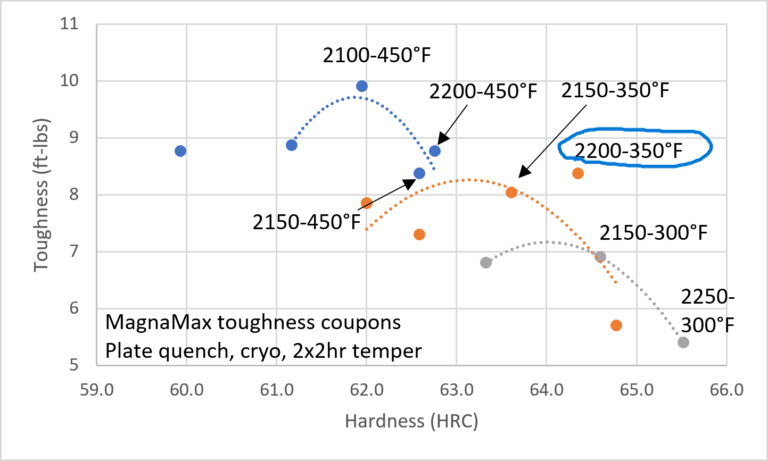
Most premium woodworking tools aim, for 62 hrc with a variance of 61-63. They aim for this hardness level because it is usually the sweet spot for having high enough hardness for good edge retention while maintaining enough toughness to not experience major edge chipping. For a given steel increasing the hardness usually decreases its toughness. Magnamax is exceptional in this regard as for a given hardness level it has superior edge retention and toughness than traditional tool steels used in woodworking tools such as O1, A2 or CRV. I chose to heat treat at 2200F and temper at 350F to land at 64 HRC for Roberts Fine Tools Magnamax steel. The reason for this is due to it being the highest hardness Magnamax can reach without losing much toughness. This allows the steel to have significantly higher edge retention while maintaining higher toughness than tradition tool steels. See Chart Below published by Dr. Larrin Thomas.
Why Small-Batch Heat Treatment Matters
Heat treating blades
Precision Heat Treatment
A woodworking tool is only as good as its heat treatment. Even the finest steel cannot reach its full potential without a carefully controlled process. At Roberts Fine Tools, every blade is heat treated individually using methods chosen to maximize the performance of each steel.
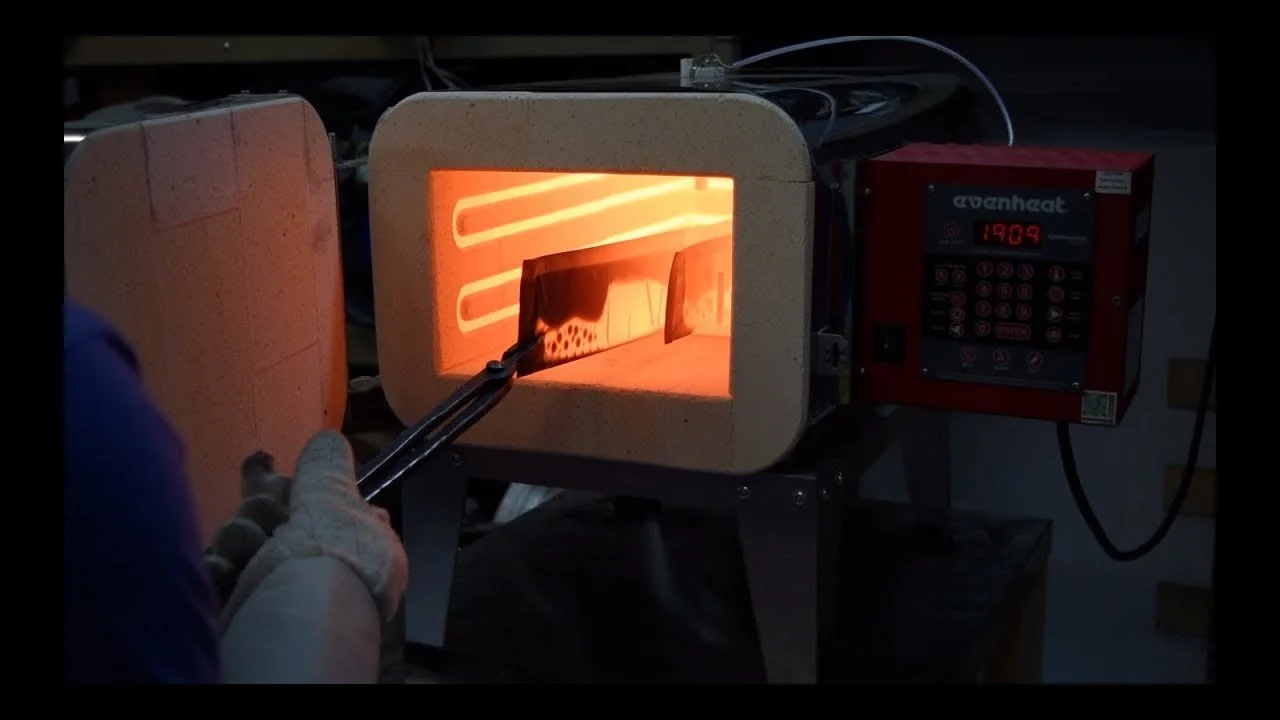
Every blade begins in a digitally controlled Evenheat heat treating kiln, where temperature and soak times are precisely controlled. Consistent temperature is essential for achieving the desired hardness and microstructure.
Immediately after leaving the kiln, blades are plate quenched between two 1.25-inch thick aluminum plates with forced-air cooling. Aluminum rapidly removes heat from the steel while helping maintain excellent dimensional stability and reducing distortion.
The blades are then transferred as quickly as possible into liquid nitrogen for cryogenic treatment. This rapid transition minimizes retained austenite by transforming more of it into martensite before tempering. The result is a more complete heat treatment that contributes to improved hardness, wear resistance, dimensional stability, and edge retention.
Finally, every blade receives a double temper, relieving internal stresses while developing the ideal balance of hardness and toughness for demanding woodworking use.
Because every blade is processed in small batches, I can carefully control each step rather than relying on a large production process.
Benefits of Small-Batch Heat Treatment
Small-batch heat treatment allows every blade to receive individual attention throughout the process.
Rather than processing hundreds or thousands of parts at once, each blade is monitored from the kiln through quenching, cryogenic treatment, and tempering. Rapid transfers between each stage help ensure the steel follows the intended heat treatment cycle as closely as possible.
Research by Dr. Larrin Thomas has shown that for air hardening steels , rapid plate quenching combined with immediate cryogenic treatment can produce measurable improvements compared with slower industrial gas quenching and delayed cryo under the conditions tested. This also allows our steel to have higher hardness to toughness ratios and less variance in HRC than industrial batched heat treated steel. A2 appreciably benefits and MagnaMax greatly benefits from precise small batch heat treatment/ plate quenching .In practice this means less sharpening and less chipping for a given hardness. My process is designed to follow these principles while maintaining consistency from blade to blade.
References
https://knifesteelnerds.com/2026/06/01/magnamax-industry-vs-custom-heat-treatment/
A2 Steel
Why A2?
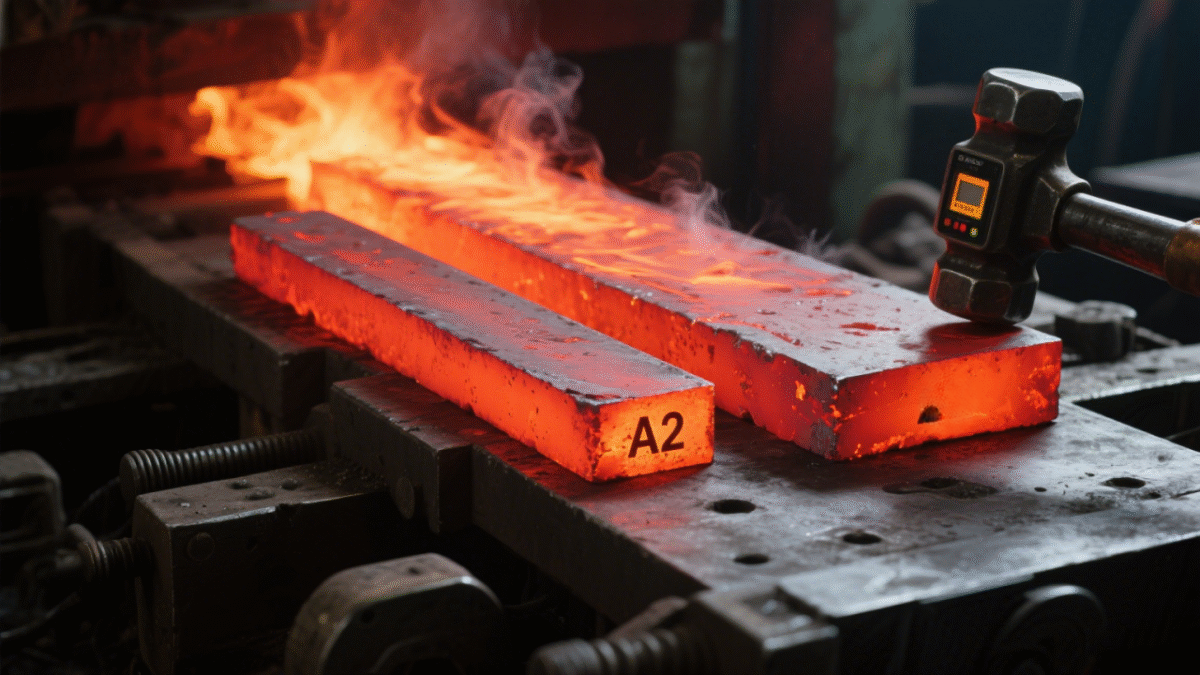
A2 has earned its reputation over decades as one of the finest steels for woodworking tools. Its combination of toughness, dimensional stability, and dependable wear resistance has made it a favorite among premium plane makers and chisel manufacturers. For woodworking tools A2 is a balanced steel offering a good balance between edge retention, toughness and ease of sharpening. Since A2 is a air hardening steel it naturally stays straighter during quenching and is enhanced even more with the addition of clamping between two thick aluminum plates during the quench. When properly heat treated using precise temperature control, rapid plate quenching, cryogenic treatment, and double tempering, A2 continues to deliver outstanding real-world performance.